Free parent training groups

Currently accepting referrals for free Triple P Stepping Stones groups on the Gold Coast

Movie Reviews

Check out movie reviews from a Christian and Psychology perspective.

Book reviews

Check out the latest book reviews from a Christian and Psychology perspective.

Referrals

Currently accepting psychology and parenting referrals on the Gold Coast.

Thursday, 25 July 2013

Book review: Functional Assessment for Challenging Behaviors (2012)


While working in a community child mental health clinic, I found myself searching for resources to help with challenging behaviors such as self-injury and aggression. This is how I stumbled across this text. Not exactly what I was looking for since it focuses on challenging behaviors within a developmental diagnosis (e.g. ASD, PDD), but still a useful read.

This text was well-written and flows well. As a clinician, we are always after evidence-based research that informs practice. And this text delivers short and concise information backed up by research.


My Psychological Perspective:
To me, using the applied behavioural analysis (ABA) framework to formulate the presenting problems of a client is helpful to both me, and the client's understanding. It's what I always say in therapy, "we are more likely to do something again if we have been rewarded for it". And so, as the text describes, it's about finding the function of the challenging behavior. The review of case studies the authors presented was able to vividly present the importance and use of functional assessment.

The authors labor on about how functional assessments are implemented, which undoubtedly would be useful detail for a beginning practitioner or college student. The authors highlighted the importance of measurement, and if my clients would do the measurements, I am sure I would have more useful information for my baseline, treatment and outcomes. But sometimes I wonder what type of measurements would be most useful for clients, and I wish the authors could have addressed this more from a consumer's perspective.

And intuitively,  the authors present research based treatments that follow on from functional assessments.

My Christian Perspective:
I actually gave a talk about functional assessments for children's sunday school at a local church not too long ago. I emphasized similar points to the text- that it's crucial to understand the function of behavior we consider challenging. There are several outcomes of this (1) we let the behavior slide, because we understand the need and there is no risk to the child or others (2) we prevent or redirect the behavior (3) we give consequences to the behavior that means the child will choose not to do it again.

All this makes logical sense. But I think there are things we as humans can't understand with logic, because we are also emotional, and spiritual.

I believe that the authors rightly focused on challenging behaviors in children with ASD, PDD because challenging behaviors are highly prevalent in that sample, and also because when we consider other children/adults, there are more complicated domains we need to consider.

It is my hope that we take time to understand child behaviors, not only to change misbehavior, but in someway, understand what Jesus was talking about more. Mark 10:13-16.


My overall rating: 

I believe that this is a useful resource for college students as well as clinicians practicing in evidence-based child mental health. The editors were able to summarize pertinent research in a wide area and condense it into a logical sequence. They were able to describe challenging behaviors and the importance of functional assessments. 

Functional Assessment for Challenging Behaviors is available now through Springer and amazon .


I was provided a review copy of Functional Assessment for Challenging Behaviors by the publisher but was not otherwise influenced in this review. 

Saturday, 13 July 2013

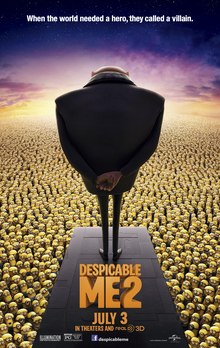
Movie Review: Despicable Me 2 (2013)


Movie Summary: Despicable Me 2 (2013)
My sunday school kids had been talking about this since last year. And so I caved and finally watched it. Despicable Me 2 follows on from the original movie. Gru is no longer a villain and is bringing up girls based on his business ventures as a single parent. However, his help is needed to save the world. And an unlikely uncoordinated female agent becomes his partner in crime *um... *I mean partner to save the world. 

My psychological perspective:
Suitability for children: 
I believe that this movie is suitable for most of the family. There is a fair bit parents can digest with children. Kids any younger than 13 should really have parental guidance as there is a fair bit of silliness in the movie as well as comical violence. There is a lot of focus on kids dating and dating of single parents which will require discussion.
It's a seriously funny movie and the minions are cute as always.

Things to talk to your kids about:
Good vs evil. 
Things to talk to your teens about:
Dating. Single parents.  Deception/ betrayal.

My Christian Perspective:
My other concern was the way dating was introduced into the movie but this is probably not the time or place to discuss my views. There is a little article on this matter at http://www.cbn.com/family/youth/burns-teens-dating.aspx. The article talks about radical respect for the opposite sex because Christ is in us.

If you are in need of an activity. This film is a worthwhile laugh.


My overall rating: 

Good
This resource maybe useful and maybe a decent use of time.

It was funny, but I was left wanting more. The original film was so successful because there were so many new creative ideas. The trouble with this sequel is that it's predictable and there were no additional elements in the characters. But that being said, kids love repetition, so your kids will love this. 

Despicable Me 2 is currently screening at cinemas near you. And I've heard good things about the happy meal toy. 

#despicableme2 #pixar #moviereview @despicableme

Friday, 28 June 2013

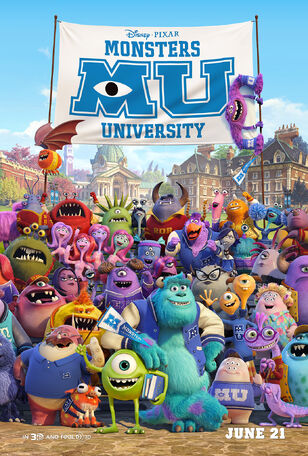
Movie Review: Monsters University (2013)


Movie Summary: Monsters University (2013)
Before Mike and Sulley were heroes of Monsters Inc (2001), they went to university. This prequel was true to the original movie. Without giving too much away, it's the age old theme of the underdogs becoming heroes. Mike and Sulley both had great expectations of how university would prepare them to be monsters.

I loved it, but I'm biased because I loved the original movie. It was so funny, so funny. And it was funny at so many different levels that it's sure to be relevant no matter your age. It's quite a good time to show this movie, the kids who enjoyed the original movie 10 years ago are probably in university now or about to enter university. 

My psychological perspective:
Suitability for children: 
I believe that this movie is suitable for the whole family. Parental guidance is recommended for little ones where it may become a little scary.
The premise behind the Monsters movies are that children's screams power their city. And there is a whole system trying to figure out what children are afraid of to customize the scare. more relevant to the original movie, but children can overcome fears by reframing and thinking their monsters are funny or cute. In this movie, the monsters use their strengths to overcome their weaknesses and gain confidence.

Things to talk to your kids about:
Bullying. Being unique/different. Working as a team. Nightmares.
Things to talk to your teens about:
Potentially, conversations about university and career aspirations. Expectations of college life. 

My Christian Perspective:
Challenges makes heroes. Sometimes we go through a lot of suffering and are confused about where God is.  But I believe God is sovereign. Consider Proverbs 16:4. A major benefit is that God can see the ending before we do. Just like in Monsters University, I watched it knowing full well that Mike and Sulley would become a great team. At times throughout the movie I lost track of that, and I think we loose track of the fact that God is in control as well.

This movie is worth watching with your family. There are so many topics to reflect on including: making mistakes, righteousness, redemption, perseverance. 


My overall rating: 

Excellent

It was an enjoyable movie to those who were fans of the original Monsters Inc and all the little ones will love this. From my clinical experience, I have found that bullying is such a big issue in today's schools. This is a great launch point of discussion and skills building for young people. 

If you don't get a chance to watch it on the big screen, I'm sure it's going to be a favourite dvd at home. 

Monsters University is currently screening at cinemas near you. 

#monstersuniversity #pixar #moviereview

Saturday, 8 June 2013

Book review: Attachment-based clinical work with children and adolescents (2013)


This book gives a comprehensive run through of attachment from birth through to adolescence. There is a balance of research and clinical case examples. Reading the book gave me a good reminder of undergraduate psychology courses as well as a few ideas for clinical practice.

My Psychological Perspective:
Understanding attachment became exceedingly important when I began to work with children and adolescents in the public health sector. Some areas were well described by the authors, for example, Transmission gaps, that are discussed explores to when attachments don't match between child and caregiver. But other areas were muddy.
I remember learning about these theories surrounding attachment (e.g. separation-individuation, object constancy, attachment styles) years ago, but the book was able to summarize quite well using references to well known research studies, examples and case studies.
There are also things I would definitely consider more of in clinical practice after reading the book including: the use of video recording to review interactions, viewing trauma through an attachment lens, giving a traumatic event a narrative, and investigating systems more.
The authors gave brief introductions to a range of therapies including circle of security, trauma focused attachment psychotherapy. I have my reservations regarding Dance therapy/ wilderness therapy/ group play therapy, which I don't have much knowledge of but the authors were able to illustrate the use of these techniques for a basic overview.

My Christian Perspective:
At various points in the bible, God is referred to as an attachment figure. For example, Isaiah 66:13  talks about how God will comfort us just as a mother comforts a child. While this analogy works well for those with a secure attachment, those with disrupted attachments can be quite uncomfortable with this. I think the book is also useful for those of us who are trying to figure out our relationship with God. We can somewhat try to understand within the attachment framework how and why we respond to God in different ways.

My overall rating: 

Good

This is a reasonable resource I would expect in any university library but certainly not a reference I would need to turn to frequently. I thought the book was a hybrid to match the needs of an early academic (undergraduate) and clinical audience. The mix of research evidence and clinical case studies provided greater insights into the understanding of attachment in adolescence and childhood. However, this is certainly not a book that can be digested in one setting, it's wordy, and in a few chapters, the key themes were lost among citations. It would teach you how to do attachment therapy, but it will certainly wet your appetite. 


I was provided a review copy of Attachment-Based Clinical Work with Children and Adolescents (Essential Clinical Social Work Series) by the publisher but was in no way paid for writing this review.

Friday, 31 May 2013

NEW GIVEAWAY! Interview with Author Dr Helen Wright


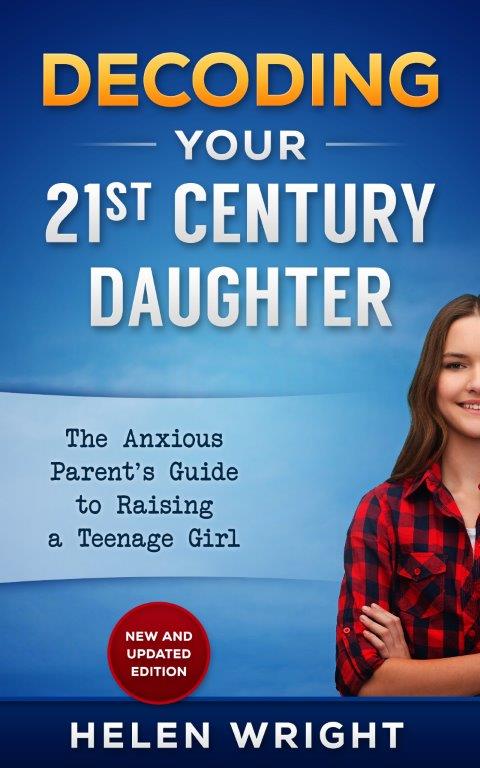
Interview with author Dr Helen Wright: Decoding Your 21st Century Daughter
To celebrate the launch of Decoding your 21st Century Daughter, I had a chat with author Dr Helen Wright. On the phone, Helen is such a lovely character, someone I would love to have as an educator.


Interview: 
Dr Helen Wright is a leading educator and expert commentator on education and parenting. She has won numerous awards as both an educator. She is currently the head of Ascham School, a prestigious girls school in Sydney, Australia. Later this year Dr Wright will be speaking at conferences in Cairns, Australia and Yale. 

 I was blessed with the opportunity to chat to Helen about her new book and connecting with parents. 

Me: Congratulations on your new book. If you had to summarize what it's about in one sentence what would you say?
Helen: Guidance for parents on how to understand their teenage daughters and how to share the wisdom.

Me: Where did you get inspiration for this book? 
Helen: I've been a head (aka principal) for over 10 years in a number of schools. I get many questions from parents about teenage daughters in particular. Many parents are going through this for the first time. Schools have seen so much of this development and built up a wealth of knowledge and so important to share that. I believe we need to create working partnerships and believe we have a collective responsibility to bring up our children. And we need to communicate the accumulated wisdom and knowledge. There has been a moved away from extended families, so I am trying to regenerate that. Sharing wisdom of parents like how an aunt would.


Me: A common theme I hear from educators is that it's those who don't need the help that often stop to listen and take in parenting advice. Do you have any tips to engage parents?
Helen: The more open we can all be, the better. As educators we are helping to educating and growing children as a partnership. Where opportunities aren't available at home; provide them at school. In the UK, breakfast clubs, after school clubs and other activities are available to engage in the community. It's about creating schools that are helping to regenerate community.

Me: Lastly, why should parents get their hands on your book? 
Helen: It's not about that. I wrote it because I wanted to share what I had learned. I just wanted to communicate that with people and help parents.

My Psychological perspective:
Decoding Your 21st Century Daughter was a quick and easy read. I believed Dr Wright bought out the key risks evident in adolescent girls. It's based on what seems to be old-fashioned common sense in a fast paced new world.
Cyberbullying is very real. I have had many clients present with a range of mild to severe mental health issues due to cyberbullying and relationship problems due to use of social media. Dr Wright gives very practical pieces of advice for parents including, setting rules and being informed. In fact, research shows that parental monitoring (knowing what your teen is doing and where they are) is one of the most effective protective strategies available to parents.
Dr Wright also talks about role changes for both the child and the parent. She provides practical tips for parents to handle this phase including changing the way parents talk to their children. There were a few suggestions that have limited research backing, and one in particular that I would have to point out. Research is still out on whether talking to children about substance use is actually protective or a risk factor. [I talked to Dr Wright about this in the interview, and she says she will blog about this soon on her blog: http://www.drhelenwright.com/blog/].
The second half of Decoding your 21st Century Daughter, is really strengths based. Despite the doom and gloom of the 21st century, Dr Wright was able to help parents focus on building self-esteem, confidence and direction in young ladies.

My Christian Perspective:
According to the bible, really early learning is really important (Proverbs 22:6). Prevention is always better than cure. I wish there was a greater focus in this book about prevention and community, but when I spoke to Dr Wright, her key aims also appear to be about prevention and community. This being said, most of the strategies and tips that Helen talks about can be applied to younger girls - fostering parent-child relationships, building their self-esteem, focusing on resilience, having established family rules based on love.
Not only is it becoming harder to parent teenagers, but from my perspective, christian parenting of teenagers is also becoming an increasing challenge. There are several things we can draw on as a community, we can build collective resilience and positivity from a young age. We can help to monitor online and offline behaviour as a community. And most importantly, we can pray together as a community for our growing girls.


Overall Rating:

Excellent

Dr Wright has done a great job in compiling a brief but comprehensive set of factors parents of adolescent girls would find valuable. She presents practical tips in a user-friendly way.  It's based on what seems to be old-fashioned common sense in a fast paced new world.
There is not an emphasis on research that often weighs down most parenting tip books, but a focus on personal experience as an educator full of wisdom. It's a useful Saturday afternoon read for parents with adolescent girls. And I will be sharing this book with parents soon!


The publishers have also provided me with 5 copies of the brand new ebook to giveaway (see below)!
#2 GIVEAWAY
As part of the Launch for the brand new Decoding your 21st Century Daughter, we are giving you the chance to win one of FIVE ebooks. Winners will be advertised on this site.

Decoding Your 21st Century Daughter ebook (A$5.99 value).

HOW TO ENTER. 
Simple fill in the form to enter (If you don't  like Rafflecopter, you can just comment below to enter). Be sure to enter your email address so I can contact you if you win!


I was provided a review copy of Decoding your 21st Century Daughter (2013) by the publisher but was in no way paid for writing this review. 

Tuesday, 28 May 2013

Book review: The Portable Mentor (2013)


Book Summary: The Portable Mentor (2013) : Expert Guide to a Successful Career in Psychology 
The authors were like Gurus in their own rights. The book covered issues and tips from before you apply to graduate studies in psychology, through to first starting work in psychology, through to supervising and teaching students.

My Psychological Perspective:
The Portable Mentor (2013) was well written and easy to understand for anyone with an undergraduate level of education.

It was such a practical guide. I found the rationales and explanations very useful. They provided great questions to help you ponder whether psychology is the career for you. They provided ideas to help you improve your graduate school applications. Looking back at applying to a Masters in Clinical Psychology and PhD, I wish I had read more, and asked more questions before I begun. I probably would have made the same decisions, but I would have been more prepared. This book was written for a North American audience so you will have to adapt some information locally.

The book also covers some great basics and reminders about producing good quality research and publishing in journals.

I found the sections on teaching psychology and preparing for private practice very useful. I guess I am biased because that is essentially how I found the book in the first place. I was searching for hours on the web for information to take with me to a contract meeting, and here it was written out clearly to help me make great decisions. If given the opportunity, I would love to write in more detail the Australian implications of some of the chapters in these sections. The registration processes in Australia are significantly different.

But just as I thought the book was done teaching me new things, the editor throws in guidance about media engagement and postdoc fellowships.

My Christian Perspective:
It would be exaggerating to say that this book is like a bible for careers in psychology but definitely, ask and it will be given to you (Matthew 7: 7-8). This is a great guide for Christians considering psychology as a career choice. While some Christians believe that psychology is of the devil, I believe that the two can play happily together. As this current book is concerned, there is nothing glaringly against God in it.

Psychology as far as I am concerned is, an understanding of human behaviour and emotions. This book is in no way prescriptive. Instead, it gives you more information to make informed choices. When considering psychology as a career choice, firstly pray. Then pray. And then pray some more. It also doesn't help to ask people for advice, read up about it (in books like this) and to give it a go.

My overall rating: 

Superior
This is a fantastic resource or was an extremely great use of time.

Most people know me to be a fair reviewer, sometimes critical. When I mark college assignments, I find it hard to give full marks because that implies there would be no room for improvement. Well, The Portable Mentor (2013) edited by Pristen, Mitchell J (Ed) was brilliant. Even though it was written for a North American audience, I found it useful even in an Australian context. 
I wish I had something like this when I was considering graduate studies in clinical psychology. And this is certainly a resource I will point students to when they are considering a career in psychology. It would be a shame if it wasn't available at your local library. If you are looking for a present for your high school student or graduate school student, this might be it!

The Portable Mentor is available for sale now on Amazon. 


I was provided a review copy of The Portable Mentor (2013) by the publisher but was in no way paid for writing this review.


Saturday, 25 May 2013

Triple P stepping stones trial

I'm very excited to be part of the roll out of Stepping Stones Triple P in Queensland, Australia. It will soon be rolled out in Victoria and New South Wales as well. As part of this community roll out, parents (with a child with disability) who complete the mysay surveys (see below, usually part of the surveys we give any new clients anyway) will get access to an appropriate level of intervention for their family- FOR FREE!


What is Stepping Stones Triple P?
Stepping Stones Triple P is a specially tailored program for parents of children with a disability. It is part of the Triple P – Positive Parenting Program, which is one of the world’s most effective parenting programs, and one of the few based on evidence from ongoing scientific research. There are more than 250 trials, studies and published papers showing it works.


Stepping Stones works by giving parents the skills to raise happy, confident children and to build stronger family relationships. It also helps parents manage problem behaviour and developmental issues common in children with disabilities.


But it doesn’t tell people how to parent. Rather, it gives them simple and practical strategies they can adapt to suit their own values, beliefs and needs.


Stepping Stones is also different because it is not “one-size-fits-all”. It’s a system that offers increasing levels of support to meet parents’ different needs. So parents can choose anything from one-off public seminars to more detailed group courses or individual sessions.


Triple P is now used in more than 20 countries including the USA, the UK, Canada, Australia, New Zealand, Belgium, Sweden, Germany, Japan, Iran, Hong Kong, Singapore, the Netherlands, Curacao, Switzerland and Romania. It has been translated into 18 languages. http://www.pfsc.uq.edu.au/evidence


Are you the parent or caregiver of a child with a disability?

Parenting a child with a disability comes with exceptional challenges. How do you know what’s best and what works? We can provide specially-tailored parenting support but we need your help.


This is your chance to tell us about your child’s experiences as well as your own. Let us know whether you’re getting enough parenting support and share with us the types of support you would like to receive.

We’ll use your views to deliver a parenting program in ways that suit families across Queensland, Victoria and New South Wales, Australia.

If you have a child with a disability, aged 2–10, go to the My Say website and help us improve parenting services for your family.

To have your say and to find out more about the program, visit www.mysay.org.au.